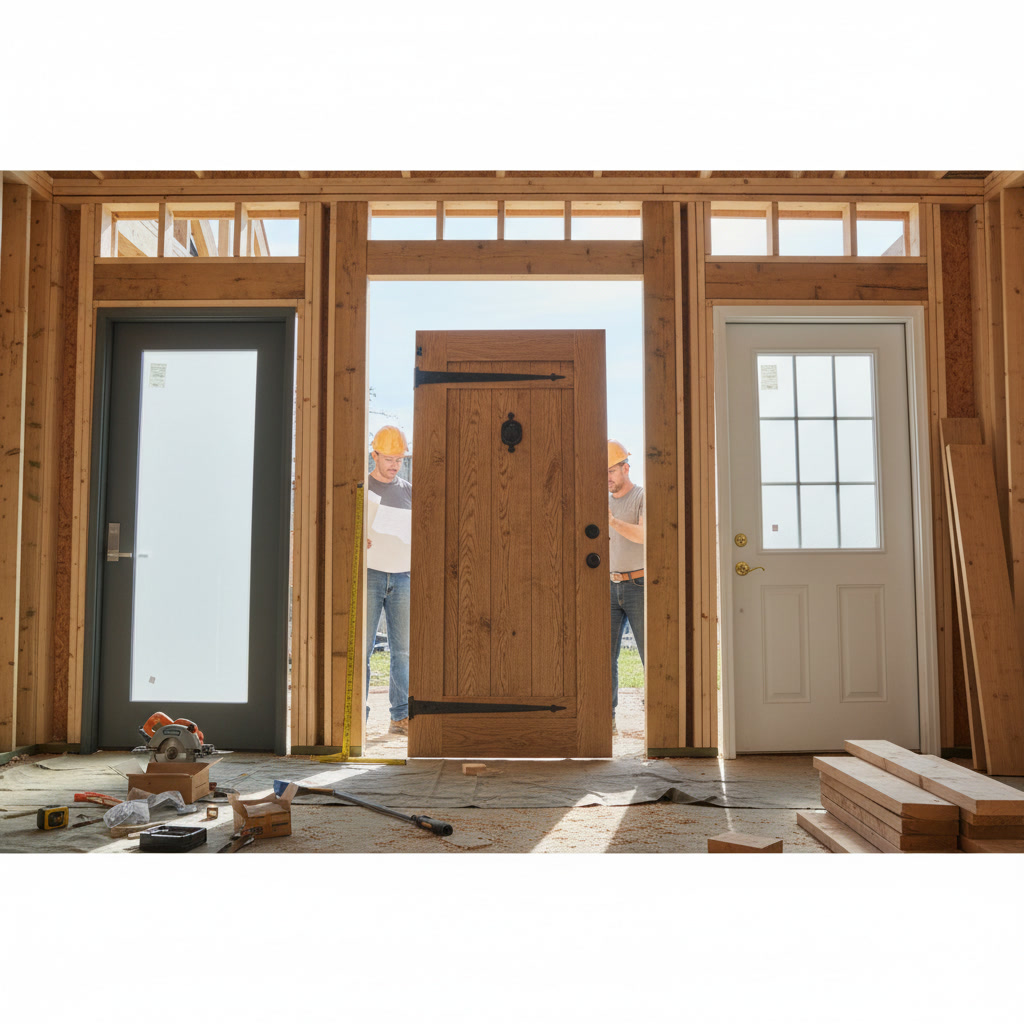
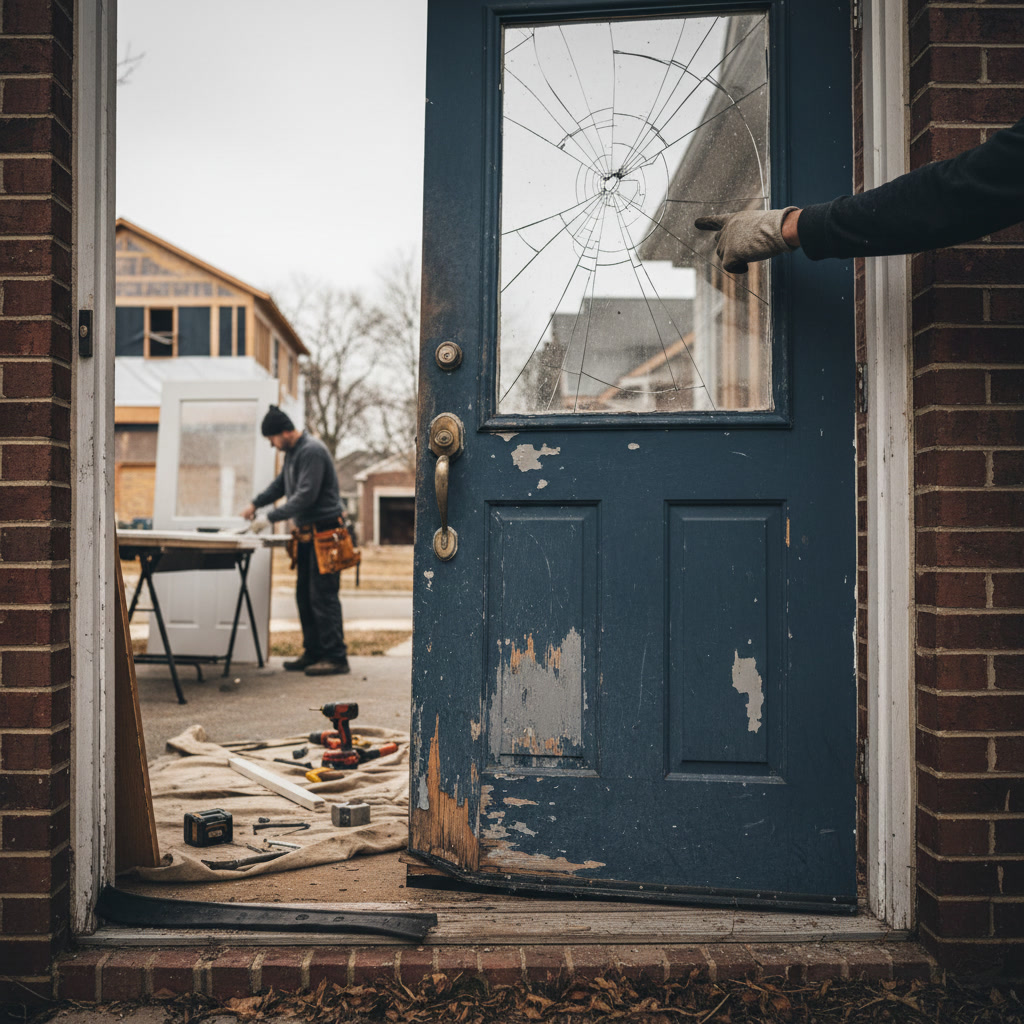
Your exterior door protects your home from Alaska’s harsh weather, provides security, and plays a major role in energy efficiency. Recognizing exterior door repair signs early can save you hundreds of dollars in heating costs and prevent more serious structural damage. A door that’s failing might show visible damage like cracks or warping, or it might reveal problems through drafts, difficulty closing, or moisture intrusion.
Why Your Front Door Matters More Than You Think
Most homeowners underestimate how much work an exterior door does. It opens and closes hundreds of times each month, endures temperature swings from 70 degrees inside to minus 20 outside, and stands as your first line of defense against intruders. When a door starts to fail, it doesn’t just look bad. It lets cold air in, drives up your heating bill, compromises your home’s security, and can allow water damage that spreads to your flooring and framing.
In Alaska’s climate, even small problems escalate quickly. A minor gap around the frame in October can turn into a ice-damaged threshold by February. That’s why catching issues early matters.
The Climate Challenge in Anchorage
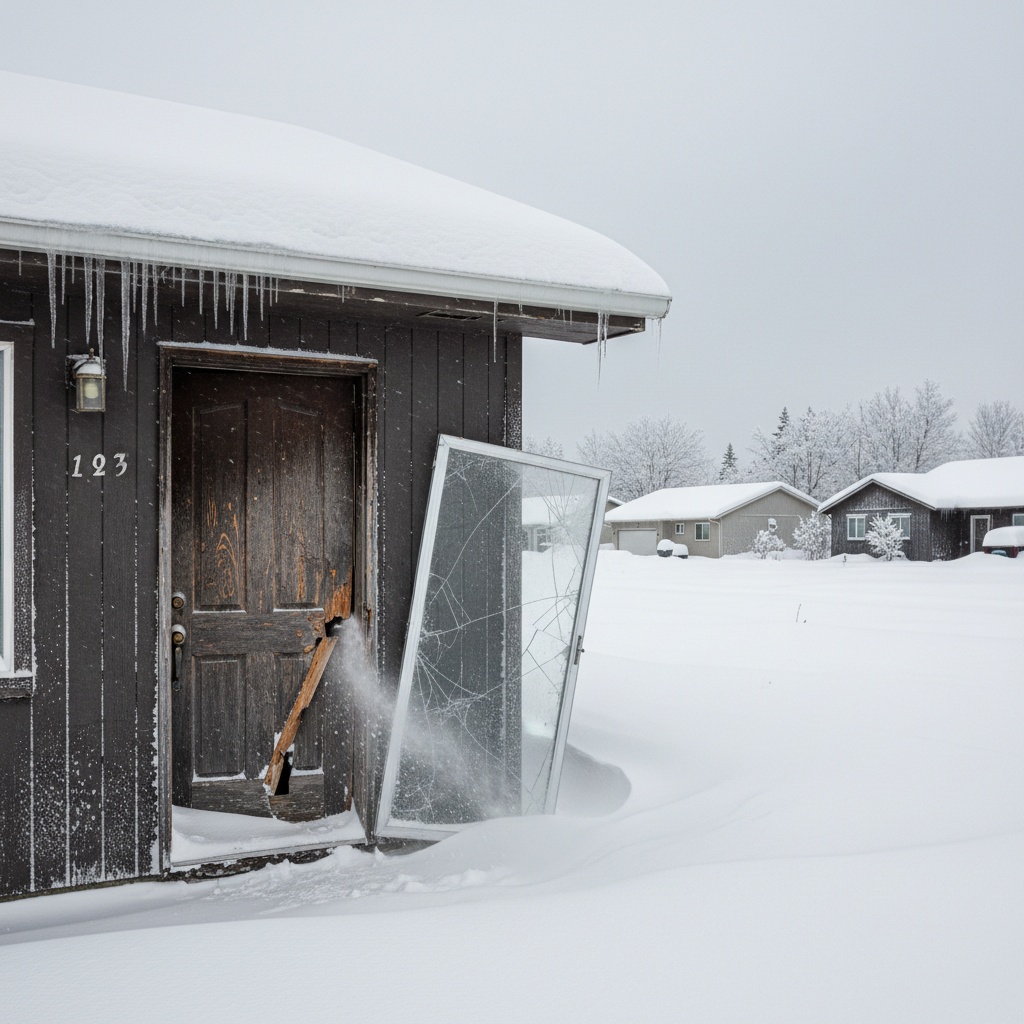
Alaska’s temperature extremes put unique stress on exterior doors. Freeze-thaw cycles cause wood to expand and contract, metal components to warp, and weatherstripping to crack and fail. Snow accumulation against the door, ice buildup in the jamb, and relentless UV exposure during summer months all contribute to accelerated wear.
Homes throughout Anchorage and surrounding areas face these conditions for six months or more each year. Even high-quality doors eventually show signs of wear under this kind of punishment.
Visible Gaps and Light Around the Frame
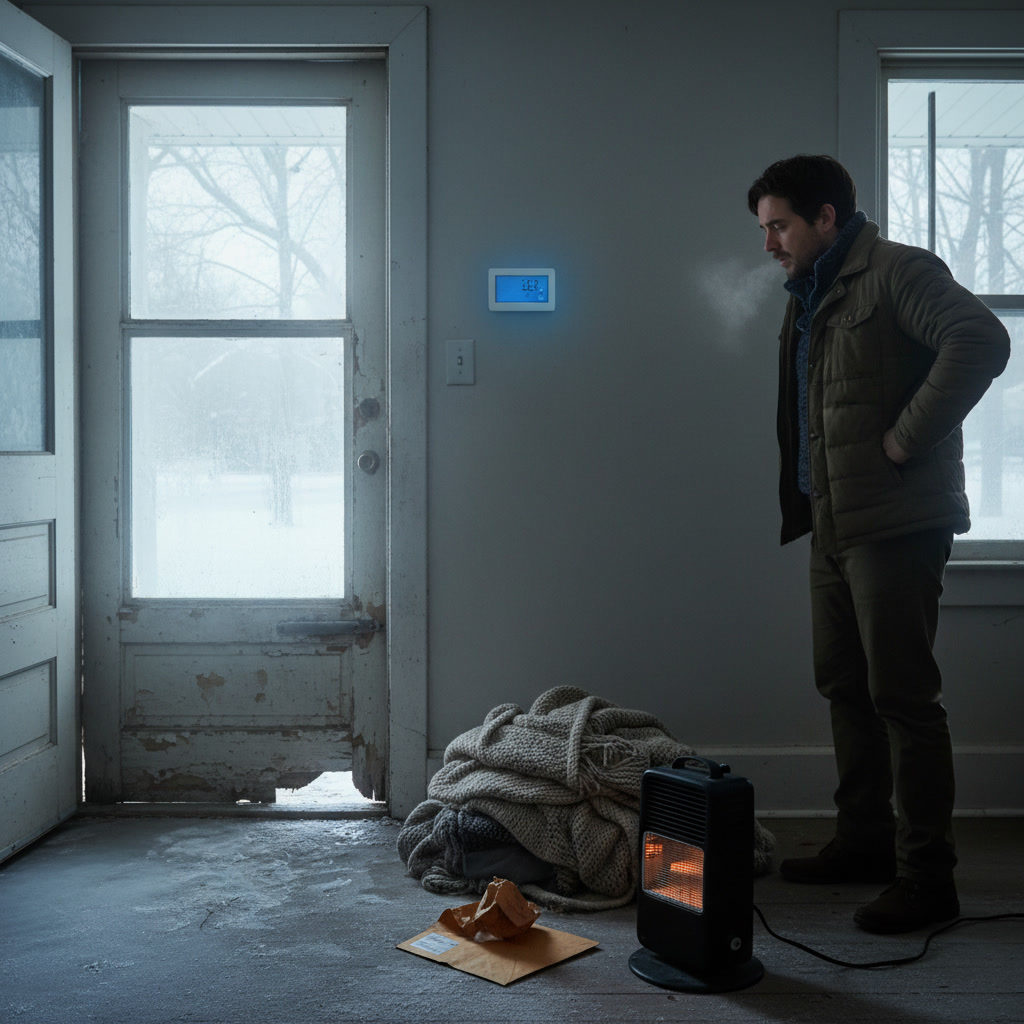
Stand inside your home at night with the exterior lights on and the interior lights off. Look at the perimeter of your closed door. If you see light streaming through gaps along the sides, top, or bottom, your door no longer seals properly. This is one of the clearest signs that weatherstripping has failed or the door itself has warped.
Gaps as small as one-eighth of an inch can cost you serious money. A poorly sealed exterior door can account for 11 percent of your home’s total air leakage, according to building performance studies. In practical terms, that’s like leaving a window open all winter.
Drafts You Can Feel
Hold your hand near the edges of your closed door on a windy day. If you feel air movement, your door is leaking. The draft test is simple but effective. Cold air infiltration means your heating system is working overtime to replace the warm air escaping through those gaps.
Drafts typically appear first at the bottom sweep or along the latch side of the door where the seal compresses most often. Sometimes the weatherstripping looks intact but has lost its springiness and no longer creates an airtight seal when the door closes.
Difficulty Opening, Closing, or Locking
If you need to push hard, lift the handle, or slam the door to get it to latch, something is wrong. Doors should operate smoothly with minimal effort. Sticking, scraping, or binding usually means the door has sagged on its hinges, the frame has shifted, or the door itself has warped.
Locking problems are especially concerning. If your deadbolt is hard to turn or doesn’t fully extend, the misalignment could allow the door to be forced open more easily. This is both a security risk and a sign of structural movement that needs attention.
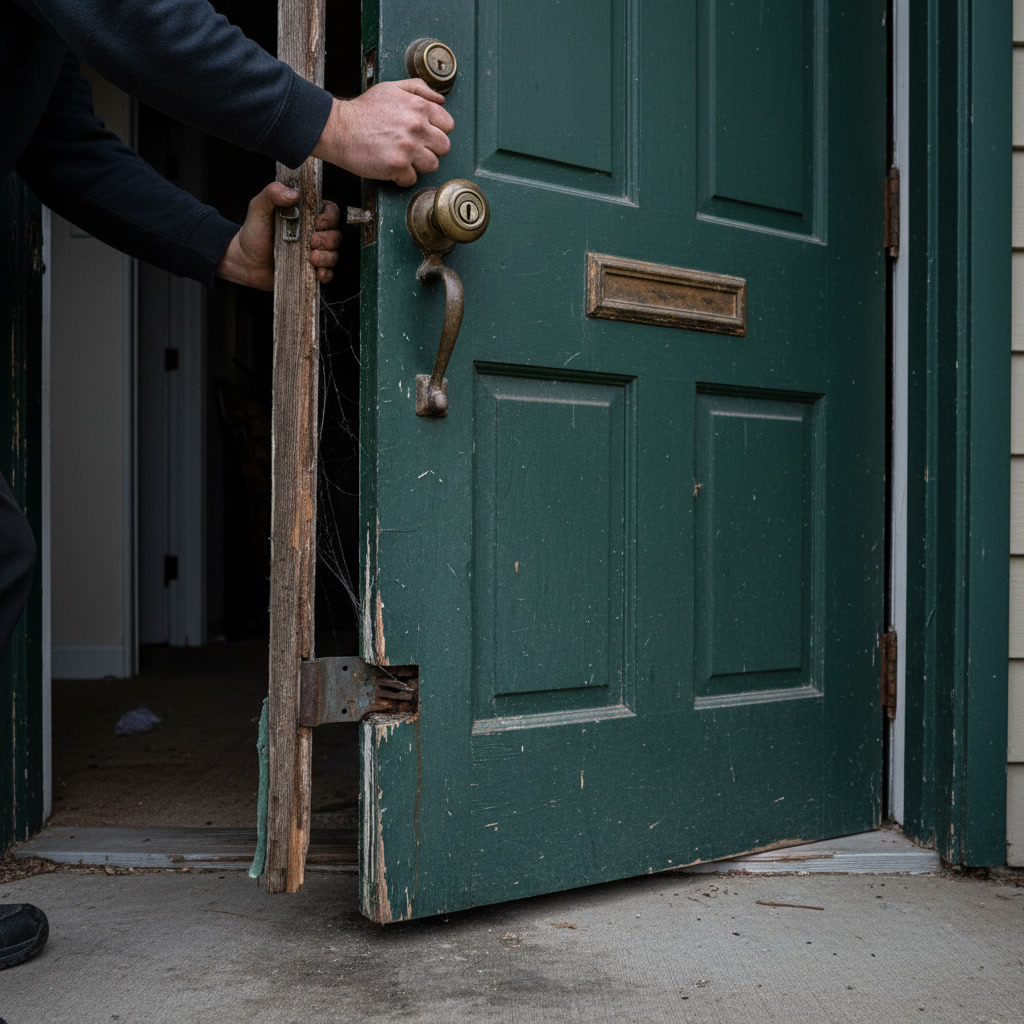
Physical Damage: Cracks, Rot, and Rust
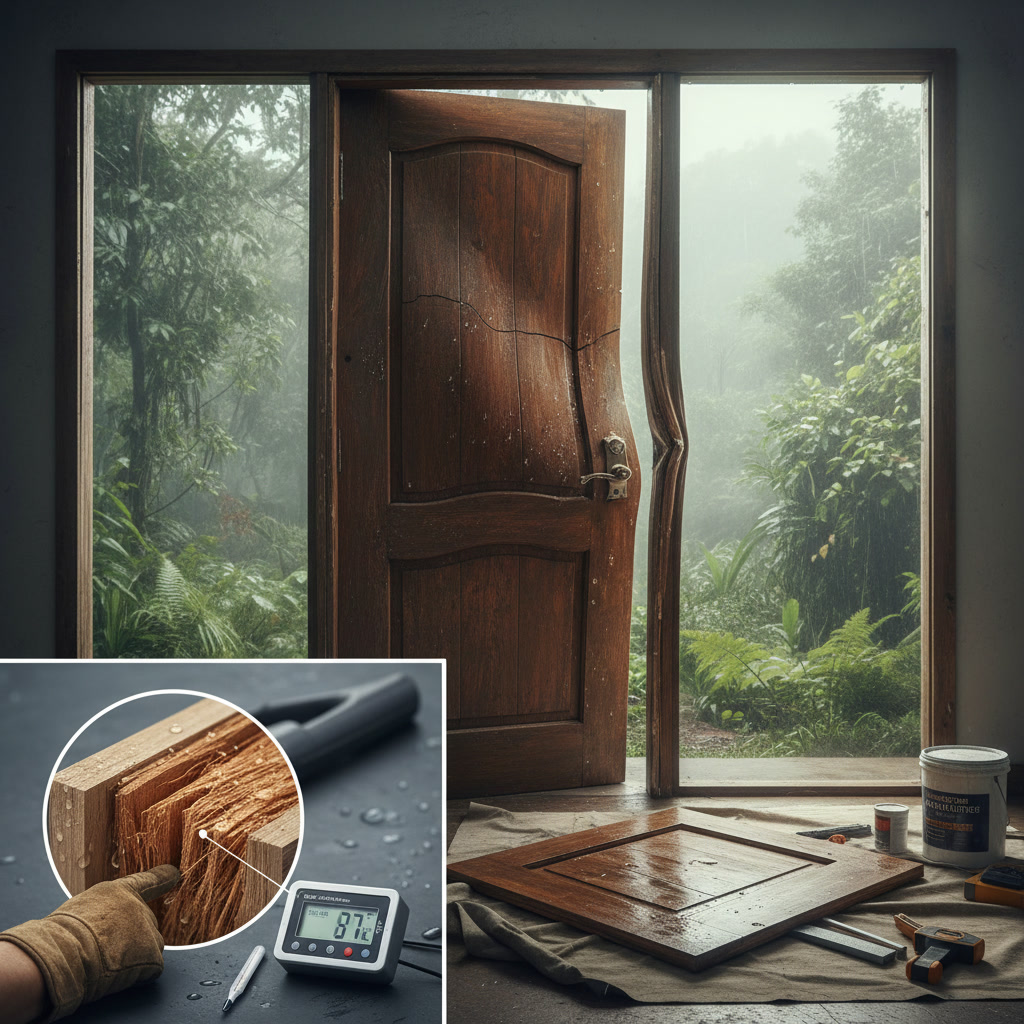
Inspect your door closely at least twice a year. Look for cracks in wood panels, rust on metal doors, peeling or bubbling paint, and soft spots that might indicate rot. Pay special attention to the bottom rail and corners where moisture tends to collect.
Wood rot is particularly sneaky. It often starts inside the door or frame where you can’t see it. Press firmly on the bottom rail and around the threshold. If the wood feels spongy or your finger leaves an impression, rot has taken hold. At that point, repair usually isn’t an option.
Fiberglass and steel doors can also fail. Look for dents, cracks in the finish, or areas where the skin has separated from the foam core. Once the protective finish is compromised, moisture gets in and the damage accelerates.
Worn or Missing Weatherstripping
Weatherstripping is the rubber, foam, or vinyl seal that runs around the door frame. It compresses when the door closes to create an airtight barrier. Over time, it hardens, tears, or falls off completely. Check every inch of the perimeter. If it’s cracked, flat, or missing in spots, it’s time for replacement.
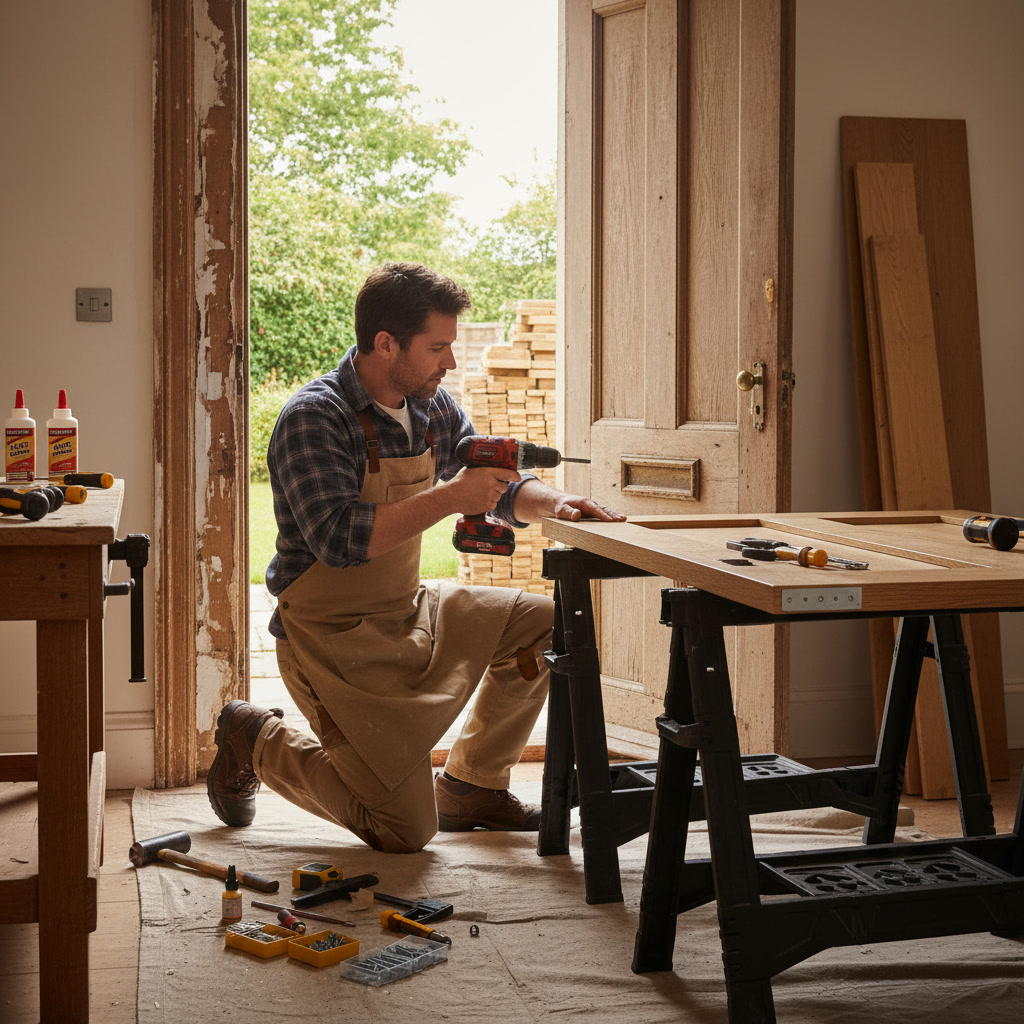
In some cases, you can replace weatherstripping without replacing the entire door. But if the door itself is warped or the frame is out of square, new weatherstripping won’t solve the problem. A professional can assess whether a simple seal replacement will work or if you need more extensive door installation and repair.
Condensation or Frost Between Glass Panes
Many exterior doors feature double-pane insulated glass panels. If you see fog, condensation, or frost between the panes, the seal has failed and the insulating gas has escaped. This drastically reduces the door’s energy efficiency and creates an unsightly appearance you can’t clean.
Failed glass seals can’t be repaired. You’ll need to replace the glass insert or the entire door, depending on the design. This issue is similar to what happens with windows, and the same principles apply. If you’ve dealt with window repair and replacement, you already understand how insulated glass failure works.
Rising Energy Bills
If your heating costs have increased noticeably and you haven’t changed your thermostat habits, air leaks are a likely culprit. Exterior doors are among the most common sources of energy loss in older homes. A door that’s lost its seal forces your furnace to cycle more often, driving up costs month after month.
While you won’t recoup the cost of a new door in a single winter, the long-term savings are real. Energy-efficient replacement doors can cut heat loss by 50 percent or more compared to a worn-out unit.
When to Repair vs. Replace
Not every problem requires a full door replacement. Minor issues like loose hinges, worn weatherstripping, or a damaged threshold can often be repaired quickly and affordably. If the door itself is structurally sound, straight, and free of rot, repair is usually the smart choice.
Replace the door if it’s warped, rotted, severely damaged, or more than 20 years old with outdated insulation. Also consider replacement if you’re addressing multiple problems at once. Sometimes the cost of patching several issues approaches the cost of a new, energy-efficient door that will last another two decades.
A professional assessment takes the guesswork out of this decision. An experienced technician can measure the frame, check for square, test the door’s operation, and give you an honest recommendation. If you’re comparing options, it helps to understand the broader picture, including what factors drive door installation cost in Alaska.
Protecting Your Home Year-Round
Your exterior door is part of a larger system that keeps your home comfortable and secure. Addressing problems early prevents bigger headaches down the road. Whether you need a quick weatherstripping upgrade or a full door replacement, working with skilled professionals ensures the job is done right the first time.
Regular maintenance extends the life of any door. Clean and lubricate hinges twice a year, touch up paint as soon as it chips, and replace weatherstripping at the first sign of wear. These small steps can add years to your door’s lifespan and keep your energy bills in check.
TC Home Services brings hands-on expertise to every project, treating your home with the care it deserves. If you’ve noticed any of these warning signs or just want a professional evaluation, our team is ready to help homeowners throughout the greater Anchorage area and Mat-Su Valley with reliable home maintenance and repairs.
Don’t let a failing door cost you comfort and money all winter. Reach out to TC Home Services today at (907) 720-2662 to schedule an inspection and get a straightforward assessment of your options.