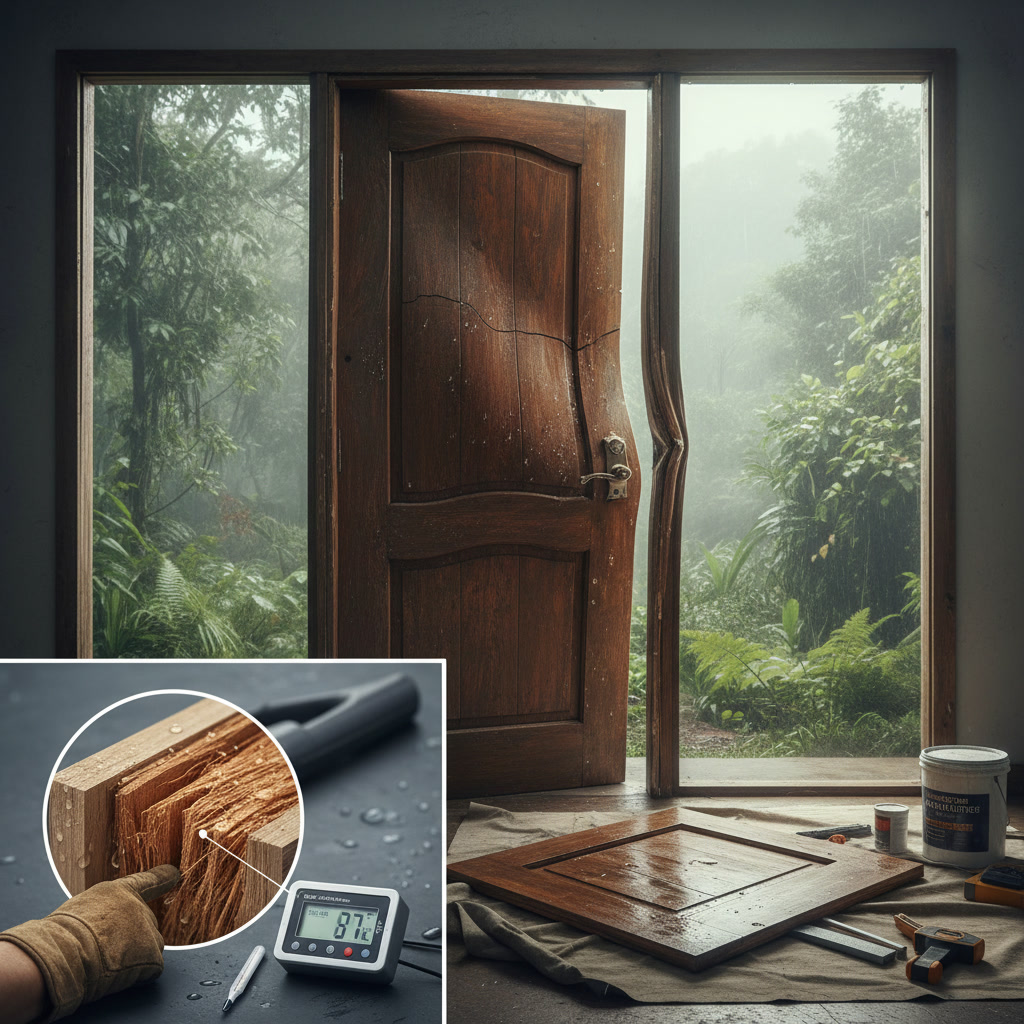
Doors swell when wood or composite materials absorb moisture from humid air, causing the fibers to expand beyond their original dimensions. The most common door swelling causes include seasonal humidity changes, poor ventilation, inadequate sealing or finishing, and water exposure from leaks or weather. Prevention focuses on controlling moisture exposure through proper finishing, climate control, ventilation improvements, and selecting materials suited to your environment.
Why Moisture Affects Door Materials
Wood is hygroscopic, meaning it naturally absorbs and releases moisture based on surrounding humidity levels. When relative humidity rises above 60 percent, unprotected wood begins absorbing water vapor through its grain structure. This absorption causes the cellular walls to expand, increasing the door’s width, height, and thickness. Even engineered materials like MDF cores can experience similar expansion when moisture penetrates their protective layers.
The rate and degree of swelling depends on wood species, grain orientation, and existing moisture content. Soft woods like pine absorb moisture faster than dense hardwoods such as oak or maple. Doors with vertical grain patterns typically swell less than those with flat-sawn grain because water moves more slowly across growth rings than along them.
Seasonal Humidity Cycles in Anchorage Homes
Alaska’s climate presents unique challenges for door performance. Winter heating systems often drop indoor humidity below 30 percent, while summer months can push levels above 50 percent, especially in poorly ventilated spaces. This seasonal swing causes repeated expansion and contraction cycles that stress door joints, finishes, and hardware over time.
Homes near water features or in areas with high groundwater levels face additional moisture pressure from below. Basements and ground-floor entries are particularly vulnerable because cool foundation walls create condensation zones where humid air meets cold surfaces.
Direct Water Contact and Hidden Leaks
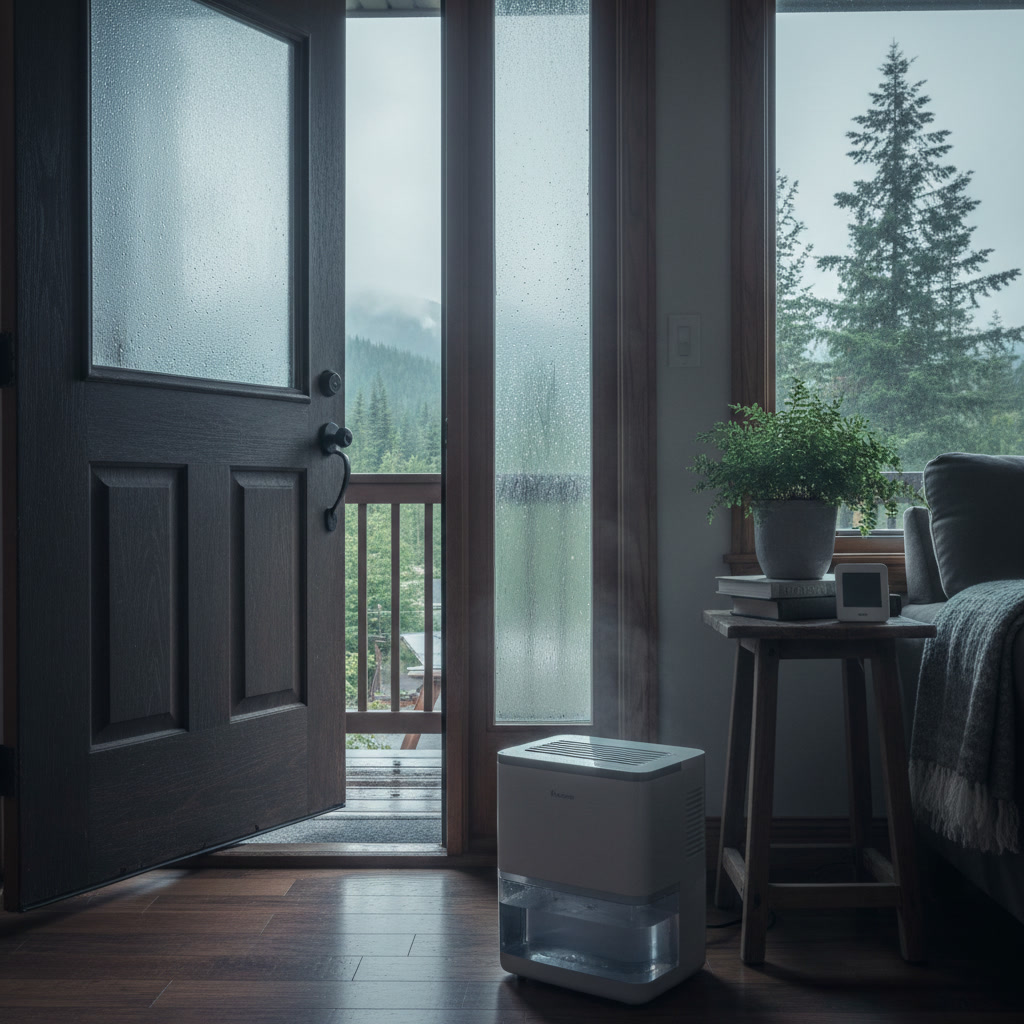
Beyond ambient humidity, direct water contact accelerates swelling dramatically. Exterior doors exposed to rain without adequate overhangs absorb water along bottom rails and exposed end grain. A single heavy rainstorm can cause noticeable swelling if water pools against the door threshold or if weather stripping fails.
Interior doors near bathrooms and kitchens face steam exposure that penetrates unfinished edges and panel joints. Plumbing leaks behind walls often go undetected until doors in adjacent rooms start sticking. The bottom three inches of any door are most vulnerable because water vapor is denser than dry air and settles near floor level.
How Paint and Finish Protection Breaks Down
Factory finishes and field-applied paints create moisture barriers, but these protective layers degrade over time. Ultraviolet exposure breaks down exterior finishes within three to five years, creating microscopic cracks that allow moisture infiltration. High-traffic doors suffer finish wear along edges where hands grip and hardware rubs.
The most critical unfinished surface on most doors is the top and bottom edge. Installers often skip these areas during painting, leaving raw wood exposed to moisture wicking. A door can have perfect face finish yet still swell severely if its edges remain unsealed. This oversight is one of the primary signs your exterior door needs attention before minor swelling becomes major damage.
Ventilation Problems That Trap Moisture
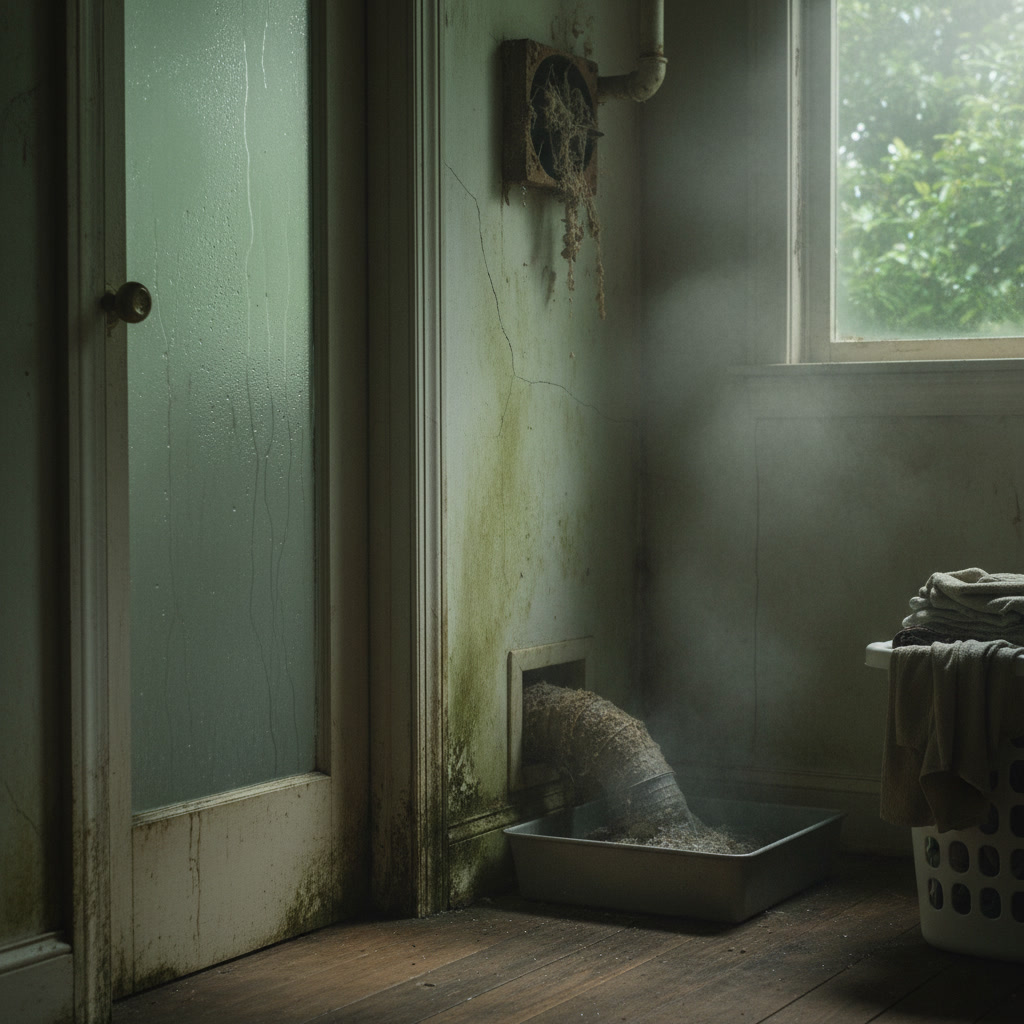
Poor air circulation allows humidity to accumulate in specific zones rather than dispersing throughout your home. Closets, laundry rooms, and bathrooms without exhaust fans create microenvironments where humidity can exceed 70 percent even when the rest of the house maintains comfortable levels.
Blocked air returns and closed interior doors prevent whole-house ventilation systems from equalizing moisture levels. A bedroom with the door closed 16 hours per day will develop higher humidity than connected spaces, especially if it contains houseplants or an attached bathroom. Over months, this localized moisture causes doors in that room to swell while others remain unaffected.
Five Practical Prevention Strategies
Preventing door swelling requires a multi-layered approach that addresses both the door itself and your home’s moisture environment:
- Seal all six sides. Apply primer and finish to top, bottom, both faces, and both edges before installation. Pay special attention to end grain, which absorbs moisture up to 10 times faster than face grain.
- Maintain 30 to 50 percent humidity. Use dehumidifiers in summer and humidifiers in winter to keep indoor relative humidity within this range. A basic hygrometer costs under 20 dollars and provides accurate monitoring.
- Install proper ventilation. Run bathroom exhaust fans for 20 minutes after showers. Ensure kitchen range hoods vent outside rather than recirculating moisture indoors.
- Create air gaps. Leave a quarter-inch clearance between door bottoms and finished floors. This gap allows air circulation and prevents water contact during mopping.
- Refresh finishes every three years. Lightly sand and recoat exterior doors on a regular schedule before finish failure allows moisture penetration.
These measures work together to create a stable moisture environment that minimizes expansion and contraction cycles. The investment in prevention is substantially lower than repeated door installation and repair work.
Material Selection for High-Humidity Environments
Not all door materials respond equally to moisture. Solid wood doors offer beauty and traditional appeal but require the most maintenance in humid conditions. Engineered alternatives provide better dimensional stability while still delivering attractive appearances.
Fiberglass doors resist moisture absorption almost completely and won’t rot, warp, or swell even with direct water contact. Steel doors with foam cores offer similar moisture resistance for exterior applications. Solid-core composite doors with moisture-resistant MDF perform well in interior high-humidity locations like bathrooms when properly finished.
For areas with persistent moisture issues, consider replacing problematic wood doors with these alternatives rather than fighting ongoing swelling problems. The upfront cost difference often pays for itself within five years through eliminated repair needs and improved energy efficiency.
When to Plane a Swollen Door
Swollen doors sometimes return to normal size when humidity drops, making permanent alterations premature. Allow at least two weeks of stable, low humidity before deciding to plane or sand a sticking door. Use a moisture meter to check the door’s internal moisture content; readings above 12 percent indicate the wood is still releasing absorbed water.
If you must plane a door for immediate function, remove no more than one-eighth inch of material. Excessive removal creates gaps when the door shrinks during dry seasons, allowing drafts and reducing security. Mark the high spots with a pencil while the door is swollen, then remove material only from those specific areas rather than planing the entire edge.
After planing, immediately seal the freshly exposed wood with primer and paint to prevent rapid moisture reabsorption. Understanding proper door measurements helps determine whether swelling has exceeded what planing can reasonably address.
Hardware Adjustments for Minor Swelling
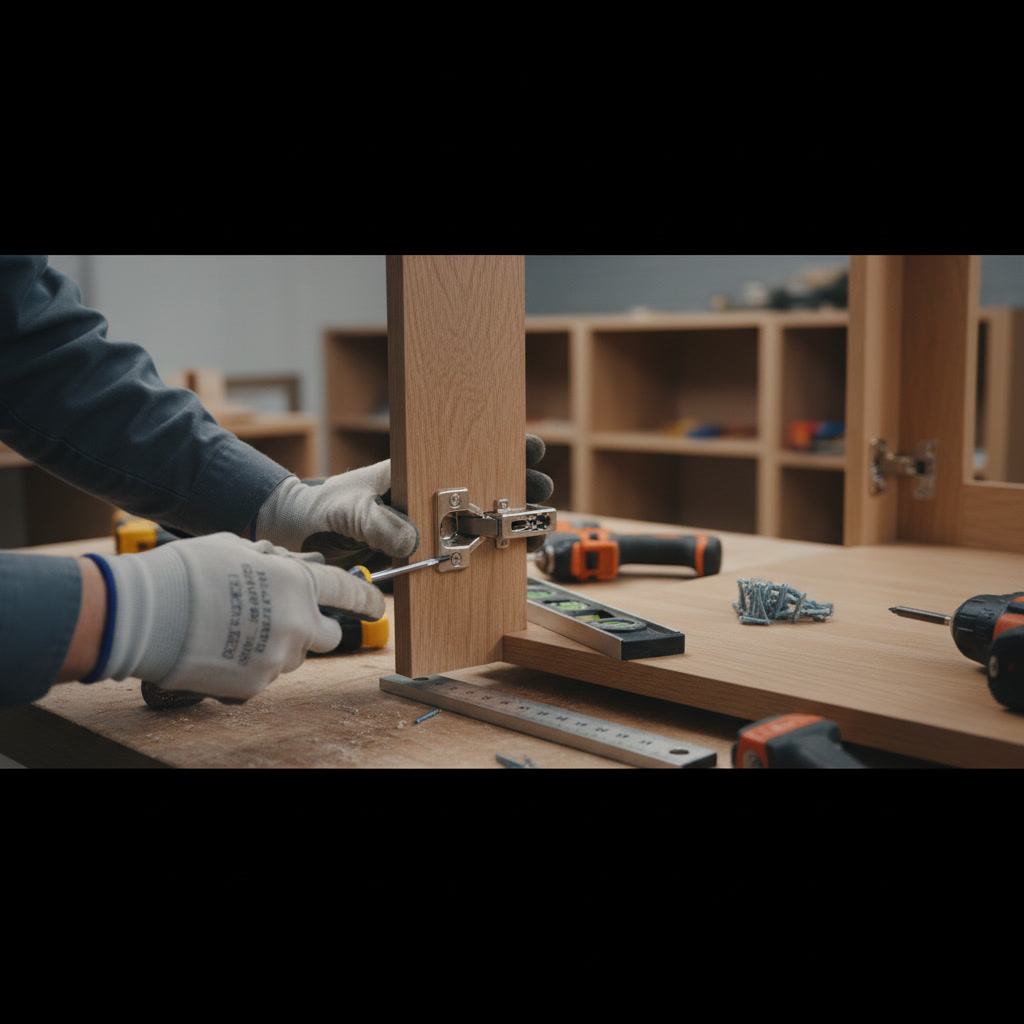
Sometimes you can compensate for slight swelling by adjusting hinges rather than altering the door itself. Tightening loose hinge screws often pulls a door back into proper alignment. If one corner binds, try shimming the opposite hinge by placing a thin cardboard strip behind the hinge leaf, which angles the door away from the binding point.
For doors that bind along the latch edge, you can sometimes file or grind a few thousandths of an inch from the strike plate opening rather than planing the door. This approach works when swelling is minimal and seasonal, affecting only the door’s ability to latch rather than causing visible binding.
Climate Control Systems That Protect Doors
Whole-house dehumidifiers integrated with your HVAC system provide the most effective long-term moisture control. These systems automatically monitor and adjust humidity levels throughout your home, preventing the localized spikes that cause swelling in specific doors.
Standalone dehumidifiers work well for problem areas like basements or poorly ventilated rooms. Units with built-in humidistats turn on automatically when humidity rises above your set point, typically 45 percent for optimal door preservation. Empty collection buckets daily or connect units to floor drains for continuous operation.
Energy recovery ventilators exchange stale indoor air for fresh outdoor air while transferring moisture to maintain balanced humidity. These systems particularly benefit tightly sealed modern homes where natural air exchange is minimal. Professional home maintenance services can assess whether your ventilation system adequately controls moisture.
Protecting Your Doors for the Long Term
Door swelling stems from moisture absorption that expands wood and composite materials beyond their designed dimensions. Addressing the root causes through proper sealing, humidity control, adequate ventilation, and appropriate material selection prevents recurring problems more effectively than reactive repairs. Regular finish maintenance and strategic hardware adjustments extend door life while maintaining smooth operation through all seasons.
TC Home Services helps homeowners throughout the Mat-Su Valley and greater Anchorage area protect their investment with expert door solutions. Whether you need professional assessment of swelling issues, finish restoration, or replacement with moisture-resistant materials, our experienced team delivers reliable results that stand up to Alaska’s unique climate challenges. Call (907) 720-2662 to schedule a consultation and discover how proper door care keeps your home secure and comfortable year-round.